Reality

f4ea31ee-0813-4eb4-b85a-ab09e3f35d92

Reality is what we take to be true. What we take to be true is what we believe. What we believe is based upon our perceptions. What we perceive depends on what we look for. What we look for depends on what we think. What we think depends on what we perceive. What we perceive determines what we believe. What we believe determines what we take to be true. What we take to be true is our reality.

David Bohm -Physicist – 1977 (inspired by the excellent Brain Pickings weekly newsletter)

Today (and every day) you can choose your reality.

Posted in business, Happiness | Leave a comment

The Frequency of Disruption


Abstract 3D Rendering of Cracked Surface.

Change isn’t the challenge – the pace of change is the challenge.

Disruption used to be recorded in geological eras, by reference to the advancement of metalwork techniques, through agriculture into industry (with the occasional eruption, earthquake, plague or fire thrown in for good measure).

Along the way, of course, civilisations and dynasties rose and fell.

During my lifetime we have witnessed technology, information and, now connectivity revolutions.

I posted earlier a short video showcasing Facebook’s mission to connect everyone, everywhere, all the time.

Darwin suggested that a species evolves through a process of continuous adaptation and, if you read the late, lamented Stephen J Gould’s book Wonderful Life:Burgess Shale and the nature of history you will know that on more than one occasion in the planet’s history, most living things have been wiped out, clearing the decks for new variations on “life as we know it Jim” to evolve.

There really isn’t any point in resisting change any more (unless it is evil).

This week we are bewildered, watching people wandering around with their iPhones held before them like religious icons, looking for imaginary monsters.

In 5 years we will be astounded by the number of people wearing VR implants in their spectacles and continuously non-present in the real world as their virtual reality plays out before them.

In 50 years?

It’s impossible to know.

In July 1966, at the age of 12, I was buying the Beatles’ “Paperback Writer”.

Protesters were rallying against the war in Vietnam outside the US Embassy in London.

Managers at Euston station voted to lift a ban on the promotion of black workers to managerial positions.

England were just days away from winning the football World Cup.

We had just taken delivery of our first rented colour TV to watch Manuel Santana and Billie Jean King lift the Wimbledon singles trophies (with an invited audience of friends, family and neighbours in our living room – “OMG the grass is green!”).

Try explaining to that young boy what his life would be like 50 years hence.

So we cannot look too far forward.

But we must accept a world in which disruption happens by the hour and not the year, decade, lifetime or eon.

Our ability as individuals to continuously adapt to those conditions will determine whether or not we survive the next wiping of the evolutionary slate.

In the meantime, I’m going to try my level best to squeeze another 30-40 years out of this mind and body, if for no other reason than to marvel.

And disrupt 😉


Posted in General, Happiness, Health, perfect imperfection, time | Leave a comment

Contains Adult Themes

Unknown

I have developed a natural aversion to country house hotels over the years, based on bitter experience.

Arriving at the beautiful Hartsfield Manor hotel and conference centre in Surrey lulled me into a false sense of security on Wednesday evening as my cab from Dorking Deepdene pulled up outside the palatial pile at 21:15.

Having gleaned the cab driver’s life story during our 10-minute ride, I wandered in expecting a 4-star 12 hours.

Silly me.

My first indication of the fun and games to come was the sight of the male receptionist mincing rapidly past me and out of the front door I had just entered.

With his fingers in his mouth he blew a potent whistle and darted off into the summer evening gloom, leaving me standing at the desk wondering what the hell was going on?

I dumped my bags, visited the gents and returned to wait patiently for his return some minutes later, telling me that he was trying to catch the cabbie as he was a persistent offender, driving over the grass when he turned his cab around to depart.

Sadly,  the chase had been unsuccessful (leaving me speculating as to what would have happened if he had caught up – a duel?) and so I was efficiently checked into room 11, “just down the corridor and take the first right.”

I marvelled at the magnificent wooden entrance hall and balustrade leading up to a grand 1st Floor gallery in “the old house” and then carried my baggage out and into the adjoining annex, following a narrow dead-end corridor to the last door on the right – my digs.

My entry revealed a tribute to a North Sea ferry cabin, with a single bed pushed tight up against the wall, a cupboard for hobbits and an equally small bathroom sporting a mysteriously enormous ticking clock on the wall.

Suddenly my £102 bed and breakfast rate seemed expensive.

The window had been closed all day and the resulting ambient room temperature would have facilitated a fried egg on my glass topped wall-mounted desk.

Air-conditioning?

Nope. Not in the annex.

So my first act was to open my window (thank goodness I could) to let at least some air in whilst I unpacked, hung my still sweaty running gear up to dry (you wouldn’t want to bunk with me when I’m travelling and marathon training) and then head down to the bar to grab a cheeky one and call home before bed.

Bars in country house hotels are often an afterthought as there is no passing trade – this one was a miniature affair set into the wall of what must once have been a reception room, dotted around with the type of casual furniture that should have red ropes draped between brass uprights, encouraging visitors to look but not touch.

I was alone and so was the bar – sans barman, I waited and waited, watching the incongruous flat-screen TV, mounted on the Victorian wallpaper and playing Sky News without sound.

10 minutes seemed to be a reasonable point at which to wander back to reception and ask where the barman was?

“In the kitchen” came the reply, with the tonality and facial expression of someone who thought that anyone who didn’t know the barman was in the kitchen must be in need of a medication top up.

Being British, I replied “thank you” as if this explanation had quenched my growing desire for a Fosters and walked back to the bar to obediently await the arrival.

Another 10 minutes were to tick away – that’s 20 Foster-less minutes at the end of a long, hot day that included 2 full client meetings and a total of 5 trains.

Men have died for less.

Suddenly the back door of the bar swung open and the elusive pimpernel returned, looking exactly like someone whose cigarette in the back yard had been interrupted and looking at me as if I had just tripped over his poodle.

The pint was pulled and I enjoyed a relatively peaceful 20 minutes sat in “the grounds” (as gardens in these places are called), watching the last of the fading sunlight and chatting to Annie.

Recognising the need for a good night’s sleep, one (pint that is) was enough and I returned to Room 11 at 22:30.

In bed, latest novel out, ready for a read before light’s out, temperature down to the 80’s in the room, bed covers discarded – surely now I can rest?

But no – enter the mozzie – you know THAT mozzie – the one that sounds like a prop from “Honey I Shrunk the Harley-Davidson”?

That high-pitched whine that floats from one end of the room to another like the micro-drone invented by Q for Bond’s latest clash with a cat-stroking villain but no matter how hard you look you cannot see it?

OK – you try reading complex historical fiction whilst the mozzie sound stops and starts.

Impossible.

I read the same sentence a dozen times, trying to recall who was who, doing what, with whom to who (and why) before getting out of bed and standing in the middle of the room, poised like a ninja with my 1000-page paperback but still unable to catch any remote glimpse of the source.

Surrendering to the inevitable, I clambered back onto the bed and switched the light out, ear plugs (bright orange) retrieved from my toilet bag and, thus, presenting a part-tango’ed, part naked scene for any hidden cameras.

Saga centrefold?

Surely now I can get some sleep.

Well no – there was one last chapter about to unfold.

The couple in Room 9.

There’s a thing about couples having sex in the room next door – your reaction goes through phases, as the “ooh, ooh, ooh’s” and the “aah, aah, aah’s” become louder and more frequent:

Stage 1 – FFS – just my luck – lucky them I suppose – I hope they get it over and done with reasonably quickly

Stage 2 – OK – I get it – well done, very impressive, clearly either just married or just met

Stage 3 – really? again? when is this going to end?

Stage 4 – Bloody hell, what are these two made of?

Stage 5 – Well I’ve never managed that! Do I need to up my game?

Stage 6 – should I applaud or something?

Stage 7 (the final stage) – I think I might pop down to reception and see if I can cadge a cigarette. I feel as if I need one.

Well I managed all 7 stages last night before drifting off purely through a combination of exhaustion and envy (and the fact that the mozzie had also capitulated).

At 05:00 this morning my alarm sounded as usual and, resisting the urge to find a bugle reveille on Google and play it as loud as possible through my Macbook to “give them a taste of their own medicine” I simply did what I always do and enjoyed a superb 10k run through the gorgeous surrounding countryside.

We live to fight another day.

Country house hotels – avoid them – unless, of course, you are feeling frisky.

Back to the Hilton tonight in Nottingham – fingers crossed.

Although my train is running late.
Posted in General | 2 Comments

A guest post from Dr. Marcos White

Marcos

Build your own digital lab in 3 easy steps. For 3 easy reasons: profit, control and personal reward.

All these digital innovations in our everyday life. Always promising to make things more efficient.

Dentistry has always been an industry of early innovators. Where innovation in materials, science and tech were bought into, always with a promise that they would repay their investment. Either through increased revenue or big savings in time and hence impact to the bottom line.

So we find ourselves always searching for that dental utopia, where you could buy the gadget AND bank the savings.

Well, when it came to investing in digital into oral scanners as a replacement for traditional dental impression materials I found this to be true. And that started me on a journey of discovery and business building that I’m going to share with you today.

Firstly let me paint a brief picture of myself to add a little context.

Yes, I am an early adopter and natural innovator. I love a good idea. I often think the status quo is flawed and am always looking to shake it up. I often look to tech, specifically digital tech, as a way to make life and it’s organisation leaner.

However I would always need a business case to be robust before making an investment in new equipment or software. To the uninitiated, what I mean by a business case is that in a simple sum I can prove that the investment is going to make me money or at least be cash neutral.

When it came to a recent acquisition of a CBCT scanner I baulked at the investment for almost 3 years because I couldn’t rationalise the business case. It wasn’t until I was referring such a high volume of patients for scans which I was paying for (all inclusive case pricing for implant treatment – don’t judge me) that I did the sums again. When I reached a certain level I realised that the money I was spending was now equal to what I would be paying for a CBCT on monthly finance. Which I would one day own.

So the first step towards building an on site digital lab came with the purchase of a 3shape Trios scanner. The ‘reason’ at the time was better accuracy, better insight into my own preps and that scanning would avoid errors and hence save time (and hence save money).

As it turned out the initial business case was much more concrete than that. In simple terms I added up all our impression material spend, impression trays, implant copings, implant analogues and other implant consumables over a year, and discovered we were spending more than the finance for the Trios would be. Immediately making money whilst elevating our standards and patient experience.

And it gets better.

What I hadn’t at that time considered was the knock on lean effect it would have. No need to order ortho boxes to store study models and old cases. No need to pay staff to store them and devise a system. No need to sterilise impressions. No bits of alginate all over the floor. And so it goes on.

Fast forward 18 months and we now have an on site digital lab with a scanner, a mill and a ceramist. 2 bits of tech and 1 new member of staff.

Over the last 12 months we have designed and fabricated all our dental and implant restorations: veneers, crowns, bridges, implant crowns and bridges – even full arch implant bridges.

We never take a putty and wash impression. Everything is captured digitally. Our scans are emailed to a colleague who prints our 3D printed models and we receive these 48 hours after scanning, after which everything else happens on site.

Recently I carried out a little number crunch to see how profitable our fledgling lab business was. It only has 1 customer: me. I looked at our porcelain spend on implants, veneers and posterior crowns in the previous year and put that number in column 1.

I then added up our staff costs (1 ceramist), material costs (porcelain and implant abutments), and equipment finance costs over the last 12 months and put that in column 2.

The difference between column 1 and 2 was a staggering £75,103.46. Pure profit. Straight to bottom line.

So, obviously I’ve missed out the bits in the story where it was a bit challenging. But nothing this rewarding dentally or financially comes easy.

I am running a 2 day course in Leeds in September to tell my story and how it can be replicated at whatever level my dental colleagues feel comfortable.

It could be investing in their first digital intra oral scanner.

It could be learning how to use the Cerec scanner they already own for more than just porcelain inlays; learning how to design and restore implants.

Or it could be going the whole hog. Realising that taking ownership of the design, appearance and function of the final dental restoration may be the most rewarding career decision they ever make.

See the link below for more details and for booking:

http://www.theimplanthub.com/education/the-desire-to-go-digital/

Marcos White

The Courtyard

Posted in business | 1 Comment

Where the money goes

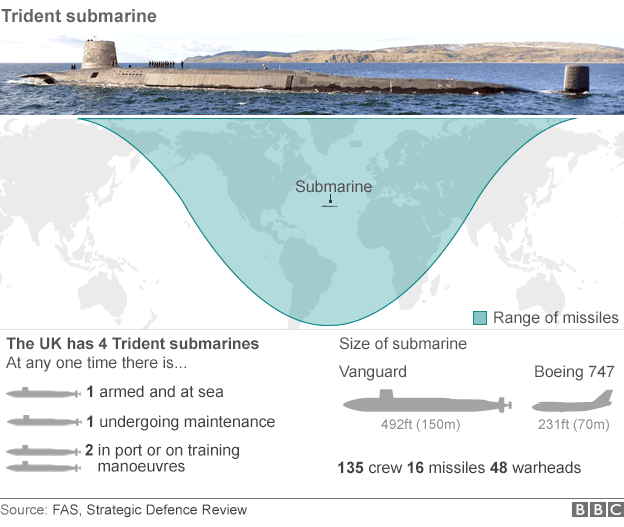
_82193234_trident_missile_reach_624MPs have backed the renewal of the UK’s Trident nuclear weapons system, voting 472 to 117 in favour in Parliament.

The vote approves the manufacture of four replacement submarines at a current estimated cost of £31bn.


Here’s how the Government spent our money in the fiscal year ending 2016:

Pensions – £153bn

Health – £135bn

Welfare – £54bn

Defence (existing) – £45bn

Education – £44bn

Transport – £19bn

Protection – £14bn

Interest – £47bn

Central Government – £9bn

“Other” – £66bn

How much do we owe?

National debt – £1,532 billion.


Posted in money | Leave a comment

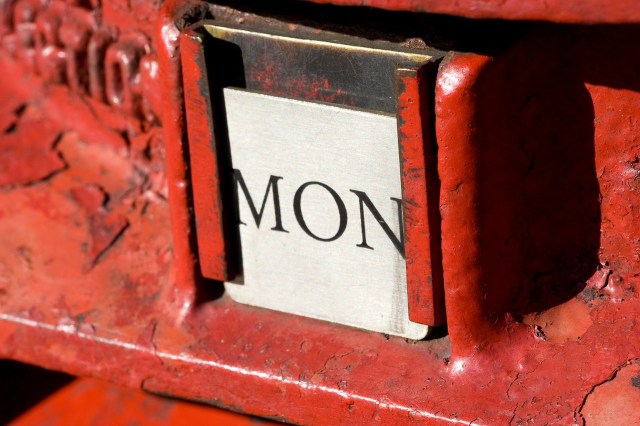
Monday

postbox-15502_1280

  • Respond to the emails you received over the weekend
  • Review your calendar for the coming week
  • Refresh the list of your tasks for the week ahead
    • prioritise into A, B and C
    • time activate
  • Consider the resources you will need
    • time
    • money
    • people
    • things
  • Remind yourself of your unique ability and the tasks you have to delegate to stay focused
  • Connect with your team and ensure that everyone is on point
  • Look at the prospects, patients/clients you will meet this week and think about your objectives for each meeting
  • Figure out where and when you are going to exercise and look after your nutrition and sleep
  • Think about who else needs you to show up

Here we go again.

Posted in business | Leave a comment

Business, Digital and Tears – a Friday riff


Happy monkey

Business is good.

Well, only 162 more shopping days to Christmas and Friday morning sees me on a 05:30 train to Sunderland (to work with the team at Westmount Dental) after walking in the door at 22:00 last night.

I will NEVER complain about being busy – not since choosing to leave corporate UK in 1987 and fly my own kite – but sometimes the relentlessly long days do take their physical and mental toll.

Roll on Friday night and a weekend of marathon training, combined with R&R and some good food and drink.

It’s been another week of political disruption that makes the near future even more difficult to predict –  it remains to be seen how this affects consumer confidence because, frankly, that’s the only effect that matters to the small business owner.

Matters digital.

In the digital world, the stage was stolen by Pokemon (note – short for Pocket Monster) Go and the most successful game launch that we have seen in recent history, all without any traditional advertising or marketing. Just internet word of mouth (aka digital reputation).

It was no surprise to see my Millennial children discussing Pokemon Go on Messenger and to find some of them taking part – I also mentioned this morning on my Facebook Profile a 35-year old taxi driver who told me yesterday that he had taken an hour off work to download and play the game in the local park.

No doubt we will soon have our own home-grown stories of people stepping off kerbs and breaking ankles, walking into walls and the like. Then, perhaps, the enterprising scallywags who wait close to Pokemon prizes so that they can assault and rob from unwary players who wander into secluded corners. Or the more sinister theories that those who prey on the young will see this as an irresistible prospecting and grooming device.

Does the news that South Korean players have wandered over the border into North Korea herald a new age of borderless humanity – that tribalism and nationhood were eventually destroyed by an occultic childrens’ game?

Whilst we seem to have been waiting for years for virtual reality to get off the runway, the partially-immersive experience of Pokemon Go is an early-warning of a world in which VR wearers wander the streets like Walking Dead extras?

We become more detached from analogue reality (that, for you and I, means the real world) and step increasingly into a virtual reality of posts, tweets, follows, likes, shares, messages and now, games and experiences.

We used to chat – now we check.

The self-same cabbie who wandered around a Buckinghamshire park yesterday was also telling me that some London-based companies are using drones to deliver goods, replacing the ubiquitous white van driver who rings the doorbell and exchanges your e-signature for the next brown package from Amazon.

Driverless vehicles that arrive at your premises and ping a message to tell you they have arrived?

My cabbie and I both came to the conclusion that such drones will be quickly stolen and broken down for scrap by members of our Crime Watch population – surely much easier that nicking the tiles off roofs?

Less publicity was given this week to a more significant digital announcement, that Google has signed deals with mobile networks to bring fast wifi access to USA smartphone users in 137 countries – intending that Google will soon have the most comprehensive coverage on the planet.

Google are also licensing 2 million new developers in India and have announced plans for a smartwatch.

Bringing me nicely back to yesterday’s post and the mention of AGFA – the global domination of Amazon, Google, Facebook and Apple and how their future plans are likely to have more influence on our day to day lives than the self-obsessed machinations of politicians and parties.

Amazon – a global retailer and video streaming service

Google – a global network provider and search engine.

Facebook – a global news and advertising network and messaging platform.

Apple – a global device manufacturer and software developer

Missing from the list – Microsoft – because I ask whether they impact my life on a daily basis. Perhaps a “yes” because I still use Office for Mac but I don’t believe that the directional changes made by MS can affect me the way that AGFA can.

Some will disagree – go ahead and think of AGFAM.

I’ll bet that none of them give a damn about Boris as Foreign Minister or whether Corbyn survives.

They are busy thinking up new ways to make themselves attractive and indispensable to us in our personal and professional lives. As a consumer of their products and services, I can’t wait to find out.

Sadness.

Finally, as we approach the weekend, I pause to reflect on how lucky many of us are if nobody we know is one of:

  • the 1,271 civilians killed in Syria last month
  • the 1,157 civilians who suffered a violent death in Iraq last month
  • the 5 police officers gunned down in Dallas this week
  • the 84 civilians slaughtered in Nice last night

No group has a monopoly on grief, because suffering takes place one person at a time.

My heart goes out to the individuals of all of these nations and others who live under threat, wherever they are.

Violence of any sort, whether committed by nations, organised terrorists or lone madmen cannot be condoned and I pray that the global reach of AGFA as well as responsible Government, business and religion might help to foster a world in which fundamentalism in any guise can be overcome.

As individuals, couples, parents, families and friends, we count our blessings and hold our breath.

Posted in General | Leave a comment

The Commoditisation of Professionalism

History Collage

A recent Facebook post that shared a recruitment advert from a micro-corporate, looking for young qualified dentists to join as salaried apprentices, generated a significant thread of comments.

Those who took the trouble to express their views were equally divided between:

  • good idea – a great way to start a career pathway (especially with the clinical and personal development support included in the package);
  • bad idea – OMG, how remuneration has fallen since I graduated – how can you expect people to work for less money when they carry student loans? What’s the catch? Who is getting rich at the young dentists’ expense? I’d rather be a supermarket manager than work in those conditions.

The enthusiasm of all the commentators led me to ponder on the issue over the last week and question exactly what we are witnessing here.

My mind was drawn to the rise and fall of the medieval craft and merchant guilds originally introduced to Europe around the time of the Norman Conquest, achieving prominence in the 14th Century.

In England today there are still over 110 guilds (now known as livery companies) still in existence but only for ceremonial purposes as their power to influence the macro-economy has long since vanished.

In their heyday, they competed with the landed aristocracy for supremacy from the time of the English Civil War (and the rise of Puritanism) and, in spite of the reinstatement of the monarchy after Cromwell, their power inexorably grew through and into the 18th century and the establishment of our current line of royalty from their Hanoverian ancestors.

The aristocracy faded and was replaced by the craft, merchant and professional classes – a scenario repeated in France during and after their own Revolution and the ensuing Napoleonic era but resisted in Russia, Austria-Hungary, Spain and other fragmented European monarchies, where increasingly detached royalty clung to power until the 20th Century and the years of mechanised revolution and war.

Kings and Queens came and went – but the craft, merchant and professional classes morphed into modern-day capitalism, making money in times of peace and conflict through their specialisations.

“The guild tended to be an extremely hierarchical body structured on the basis of the apprenticeship system. In this structure, the members of a guild were divided into a hierarchy of masters, journeymen, and apprentices. 

The master was an established craftsman of recognised abilities who took on apprentices; these were boys in late childhood or adolescence who boarded with the master’s family and were trained by him in the elements of his trade. The apprentices were provided with food, clothing, shelter, and an education by the master, and in return they worked for him without payment. After completing a fixed term of service of from five to nine years, an apprentice became a journeyman, i.e., a craftsman who could work for one or another master and was paid with wages for his labour. 

A journeyman who could provide proof of his technical competence (the “masterpiece”) might rise in the guild to the status of a master, whereupon he could set up his own workshop and hire and train apprentices. The masters in any particular craft guild tended to be a select inner circle who possessed not only technical competence but also proof of their wealth and social position.”

(Encyclopaedia Brittanica)

The 21st Century Healthcare Professional

In 2013, American surgeon Dr. Jeffrey Singer published an article entitled “How Government Killed the Medical Profession”

http://www.cato.org/publications/commentary/how-government-killed-medical-profession

A stunning read that I would recommend to any dentist who wants to understand what we can learn from the commoditisation of USA healthcare as a clue to the present and possible future of UK dentistry.

For the busy, I urge you to bookmark the article and return when you have the time – worth the effort.

For now, Singer references:

  • The Coding Revolution – targets and codes for treatment that seem hauntingly similar to the UDA system
  • Command and Control – the imposition of protocols to override discretion and experience
  • Electronic Records and Financial Burdens – compulsory digitisation, the dominance of insurers and price controls
  • Accountable Care Organisations – the allocation of patients to accredited healthcare firms
  • Doctors going Galt – doctors turning into assembly-line workers
  • Medicine in the Future – the rise of “cash-only personalised private care”

I quote from Dr. Singer’s final paragraphs:

Ayn Rand’s philosophical novel Atlas Shrugged describes a dystopian near-future America. One of its characters is Dr. Thomas Hendricks, a prominent and innovative neurosurgeon who one day just disappears. He could no longer be a part of a medical system that denied him autonomy and dignity. Dr. Hendricks’ warning deserves repeating:

“Let them discover the kind of doctors that their system will now produce. Let them discover, in their operating rooms and hospital wards, that it is not safe to place their lives in the hands of a man whose life they have throttled. It is not safe, if he is the sort of man who resents it—and still less safe, if he is the sort who doesn’t.”

Dr. Singer bemoans these developments and announces his own impending departure from the medical profession.

Here in British dentistry, we have rehearsed over and over again:

  • The history of the NHS dental contract
  • The rise of dental corporates
  • The rise of retailers, supermarkets and health insurers
  • The rise of goodwill values
  • The rise of the private dental market
  • The arrival of branding, marketing, customer service and digitisation into a profession that, just 20 years ago, was the epitome of the traditional middle-class professional guild
  • And now – it appears – the commoditisation of professionals into apprentices and journeymen before they can describe themselves as masters – and the decline of their influence as a guild

Both Adam Smith in his “Wealth of Nations” and Karl Marx in “The Communist Manifesto” heralded the decline of the pseudo-monopoly enjoyed by guilds – a decline that progressed through the 18th and 19th centuries.

Some evolved into trades unions and others into “worshipful companies” – each would have their own temporary or limited influence on the economic stage,

Decline

In their heyday from the 12th to the 15th century, the medieval merchant and craft guilds gave their cities and towns good government and stable economic bases and supported charities and built schools, roads, and churches. Guilds helped build up the economic organisation of Europe, enlarging the base of traders, craftsmen, merchants, artisans, and bankers that Europe needed to make the transition from feudalism to embryonic capitalism

They were frequently hostile to technological innovations that threatened their members’ interests, and they sometimes sought to extinguish commercial activities that they were not able to bring under their own control.

Merchants were becoming capitalistic entrepreneurs and forming companies, thus making the merchant guilds less important. 

Craft guilds broke down as the pace of technological innovation spread and new opportunities for trade disrupted their hold over a particular industry. Masters tended to become foremen or entrepreneurs, while journeymen and apprentices became labourers paid their wages by the day. The emergence of regulated companies and other associations of wealthy merchant-capitalists thus left the guilds increasingly isolated from the main currents of economic power.

(Encyclopaedia Brittanica)

The 20th Century saw the emergence of the corporation as the primary power-centre in economics. Big business, big politics and big military were the decision-makers.

We now witness a shift, about which I intend to write further in the future – the emergence of the digital super-powers to replace the cultural and economic super-powers of the last 100 years.

The rise of big data.

Goodbye The USA, The Soviet Union and China as super-powers.

Is it now really about BRICS (Brazil, Russia, India, China and South Africa)?

Or is it AFGA?

  • Apple
  • Facebook
  • Google
  • Amazon

AFGA have infiltrated every aspect of our lives without reference to political, religious, ethnic or geographic boundaries.

Those who live in communities where these digital superpowers are absent or prohibited are becoming the inhabitants of a New Dark Age.

Today’s digital guild is a MMOG (massive multi-player online game) – look at Pokemon Go.

In the meantime, the privileged position of the healthcare professional is being eroded by global and national forces for change.

Change that impacts at the grass roots level – when we discuss the “going rate” for a 35-year old qualified dentist offered a basic salary of £35,000 for a 5-day week in a Derbyshire micro-corporate.

Posted in business | Leave a comment

Salty dog


Captain

I want you to imagine your dental team attending a practice meeting on business planning.

You are interested (after all, you have your skin in the game) and they are reluctantly dragged along. At least it’s a break from routine but “yawn”.

Why not surprise them with sailing lessons?

Share with them this story:

Imagine that we are invited to take part in a transatlantic yacht race.

Before you think “not me – I don’t like boats/water/swimming and I don’t know how to sail” – can I explain that the winning team will share a purse of £1 million per crew member?

The good news is that you will all be fully trained in seamanship before leaving harbour – and the yacht will be equipped with the very latest gear and technology. No expense spared. Plenty of food and drink. Safety first.

You will be competing against two other crews, who have EXACTLY the same boat, the same training and the same gear.

The race is from Falmouth, Cornwall to New York – first past the Statue of Liberty wins the prize money.

Oh – by the way, there is a catch (isn’t there always?):

Crew A have no maps and no navigator and are given a 24-hour head start.

Crew B have a map and a navigator who is allowed to check their position once a week and are given a 12-hour head start.

Crew C have a map and a navigator who is allowed to check their position once an hour and leave Falmouth last.

Which crew do you want to be?

Please discuss.

I could say more – but in the team session I would prefer the participants to come up with their own reasons for (hopefully) wanting to be Crew C.

I want them to realise that:

  • the course between Falmouth and New York is a straight line on a map but a sailing vessel constantly CROSSES the line and is hardly ever on it
  • that the direction of the vessel is influenced by EXTERNAL forces, such as current and wind direction
  • that the direction of the vessel is influenced by INTERNAL forces, such as the set of the sail and the trim of the yacht
  • that the frequency of positional readings will increase the efficiency of the journey – you need to tack, tack, tack
  • at the end of each day, every crew is equally knackered

Following which, I want them to realise that:

  • A business with no destination or course is going – well – anywhere and nowhere
  • A business with a destination but infrequent pauses to check position will work much harder to get to any point in the journey
  • The progress of a business is influenced by EXTERNAL factors such as macro-economics, local competition, price and market sentiment
  • The progress of a business is influenced by INTERNAL factors such as team morale, occupancy, equipment, decor, productivity and the patient experience

So ask your team what type of crew they would like to be in your business – and then ask how best they can help you to achieve that.

p.s. a business performance coach helps them to learn their individual roles on the vessel, helps find a great navigator and holds you accountable to stay on course. Your business development/practice manager is your First Mate. Your business coach is your Second Mate.

If you could benefit from this presentation facilitated in your practice – or need a competent First and Second Mate – email me at coachbarrow@me.com.

I’m a salty dog when it comes to the business of dentistry.


Posted in business | Leave a comment

Relentless

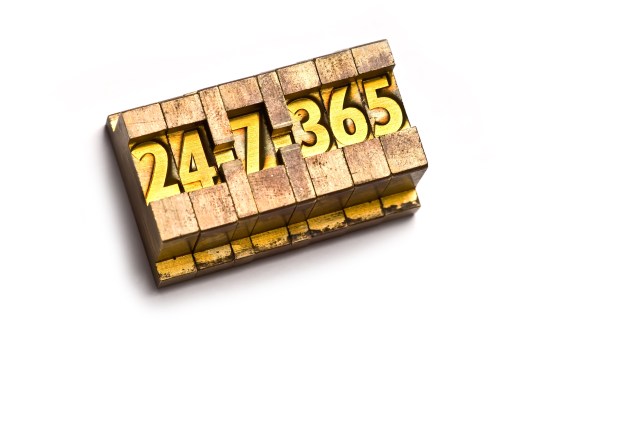
24-7-365

Running your own business. Relentless.

That’s why, when young dentists approach me at conferences and courses and ask “I’ve been thinking about opening/buying my own practice – what do you think?”

My answer is always – “don’t do it!”

Why?

Because those of us who do run our own businesses didn’t ask the question.

We had an internal burning desire to do it.

I recently checked how many hours a week I work (after 46 years at work) – the result was an average 65-hour week.

Here’s the tough truth – I have been consolidating and planning this year and if I divide my anticipated gross sales by the REAL hours I will work in the year – I reckon I’m generating about £102.00 per hour of revenue into the business.

That sounds terrible.

This is not a complaint – I love my work, I love the people I work with and I love the hours I do (and have plenty of time for my other stuff).

It simply indicates that if I add the hours I’m not with clients to the hours I am with clients, it has the effect of reducing my effective hourly rate by over 50%.

I wonder what your productivity would look like under that scrutiny?

My work is one of the primary ways in which I define myself.

If I won the lottery, I would maintain the hours and change the focus – that’s all.

I have no plans to ever stop working.

I’m immune to complaints from others about hours worked – we all ultimately have the choice.

I get frustrated listening to people tell me that they dislike the thing they do and/or the people they do it with.

Cue cliche – life is too short.

Am I going to double my prices?

Not a chance.

Am I going to reduce my hours?

Nope.

I’m going to accept the reality of running my own business.

Will I be financially successful at what I do?

Will you?

Toss a coin.

That’s how predictable financial success is.

Performance coaching in business is about increasing the odds of success but, more importantly, ensuring that the (relentless) journey is a pleasure.

Whatever the end result, the craic of ownership is priceless.

Posted in business | Leave a comment